
Dada Devs 2025 Impact Review: Technical Capacity in Practice
If you spend enough time inside a developer program, years do not announce themselves. They end quietly, usually in the middle of another build, another review, another session that runs longer than planned.
That was 2025 for Dada Devs.
Most of the year was spent doing the work. Running cohorts. Supporting builds. Working through unclear requirements. Revisiting decisions. Watching people grow more confident, not because things became easier, but because they stayed with the complexity long enough to understand it.
Dada Devs exists to support women who want to work on Bitcoin as builders. Not only to learn concepts, but to engage systems directly, understand constraints, and make informed technical decisions. That focus shaped how the year unfolded.
What follows is a clear look at what happened across Dada Devs in 2025:
Cohorts and delivery rhythm
Two technical cohorts ran across the year, each reinforcing the same principle: learning happens fastest when it is tied to doing. With the first in 2024, graduating about 60 ladies.
Sessions moved quickly from concept to application. Participants worked with Bitcoin fundamentals, Lightning Network mechanics, and developer tooling, then encountered the friction that comes with real work. Progress was not uniform, and it was not expected to be. The goal was sustained engagement and the ability to reason through problems, not speed.
By the time Cohort 3 was announced and launched in September, the program had settled into a more deliberate operating rhythm.
Engaging the Kenyan Bitcoin developer ecosystem
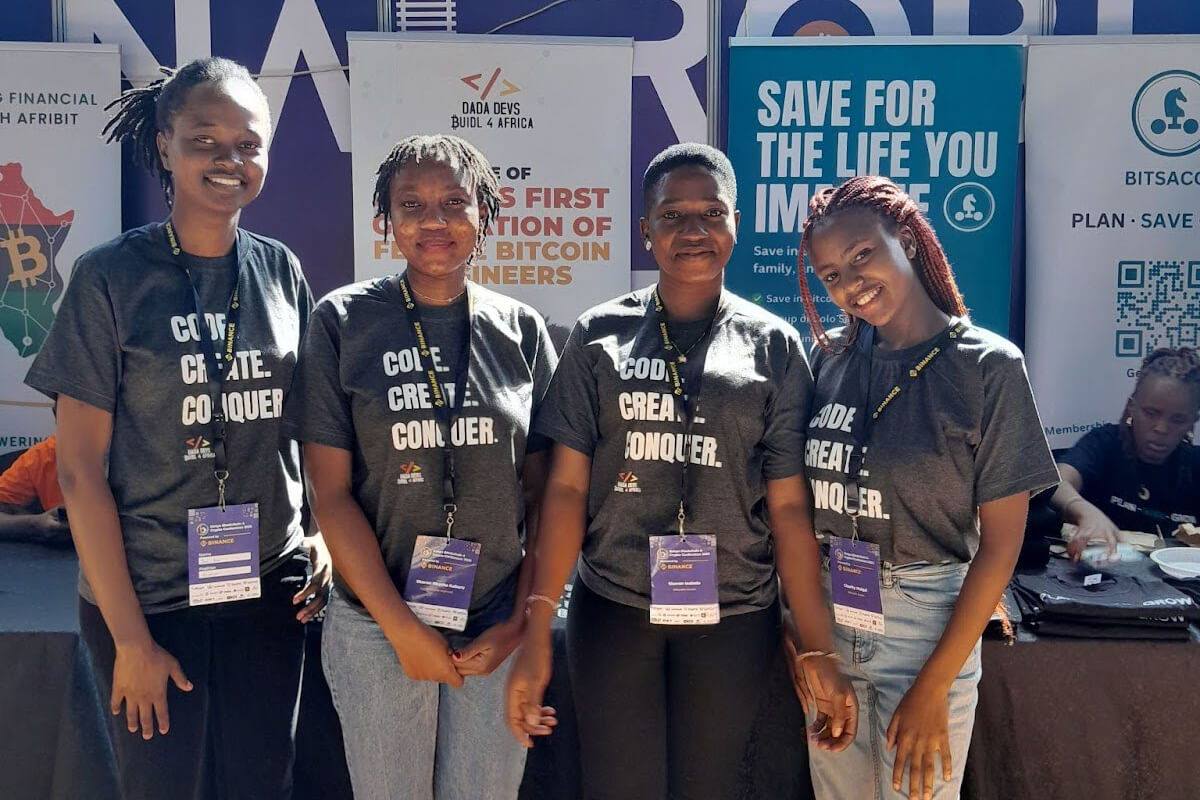
In June 2025, Dada Devs participated in the third Kenya Blockchain and Crypto Conference at the A.S.K. Dome in Nairobi, exhibiting from Bitcoin Village alongside Kenyan Bitcoin projects working across payments, infrastructure, energy, and community-led adoption. The conference provided direct engagement with developers, educators, investors, and ecosystem partners around how technical capacity is built and how open-source contribution pathways can be strengthened across Africa.
Dada Devs used this space to clearly articulate its three-month Bitcoin and Lightning development fellowship as part of a broader builder pipeline — outlining how structured learning, peer-led execution, and real project collaboration fit together. Conversations also explored sponsorship and partnership models focused on sustaining developer education and supporting practical Bitcoin adoption, reinforcing the importance of embedding technical learning within active, production-facing ecosystems.
Ecosystem presence and representation
Participation does not end at cohort completion. Technical capacity is reinforced when builders are present in the spaces where standards, tools, and direction are shaped.
During Africa Bitcoin Day in May, Dada Devs announced sponsorship for five developers to attend the Africa Bitcoin Conference in Mauritius. That commitment was later executed, ensuring builders from the program were present within broader continental conversations.
The objective was deliberate: builders should not only learn systems, but participate in the environments where those systems evolve.
Masterclasses and focused technical sessions
Alongside cohort delivery, Dada Devs ran targeted technical sessions to deepen understanding in areas where participants were already building. These sessions were designed to intervene directly in active work rather than operate as standalone instruction.
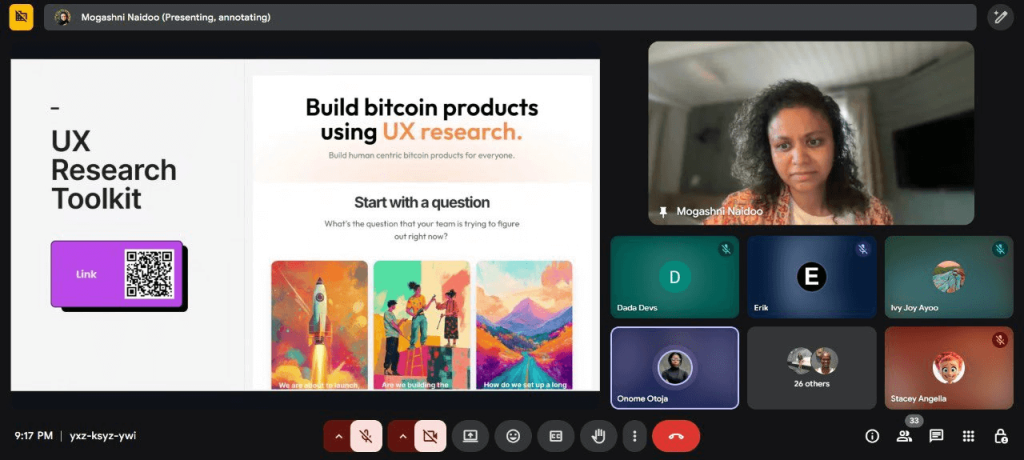
Two sessions were led by Erik and Mogashni. The first was a project-level review, where participants presented their ongoing builds and received direct feedback on interface structure, user flows, and design decisions. The focus was on improving usability without compromising security, particularly in products involving self-custody and user-critical interactions.
The second session formed part of a broader partnership with the Bitcoin Design Foundation and took the form of a dedicated workshop on human-centered design for Bitcoin products. This session examined real interfaces and design patterns, helping participants understand how technical constraints—such as signing flows, recovery paths, and error handling—shape responsible design choices.
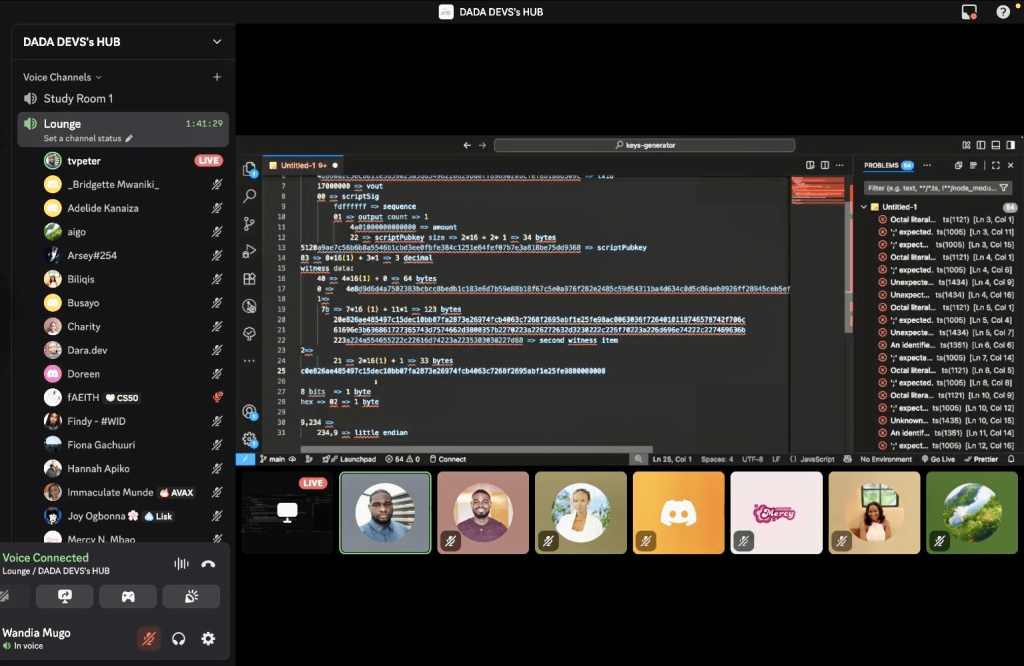
In parallel, ongoing Discord-based classes provided continuity throughout the year. Discord functioned as the primary coordination and delivery layer, supporting live sessions, project reviews, and asynchronous technical discussion across cohorts and collaborations.
Peer-led execution and weekly delivery
Cohort 3 introduced a peer-led delivery model to strengthen consistency and ownership in execution. Peer leads worked directly with participants to define weekly goals, track progress against agreed deliverables, and surface blockers early in the build cycle. This moved responsibility closer to the work itself, resulting in more focused delivery, more practical technical discussions, and reduced dependence on central facilitation.
Participants continued building active projects with support from peer leads alongside business and technical mentors. Mentorship emphasized decision-making rather than instruction—prioritization, scope control, and early testing of assumptions—mirroring real-world engineering environments.
One project publicly announced during the cohort was a digital signature implementation. This work provided a concrete context for applied cryptography, system integration, and design decisions related to trust, verification, and user interaction, reinforcing the program’s emphasis on learning through production-shaped work.
Working with the Fedimint SDK
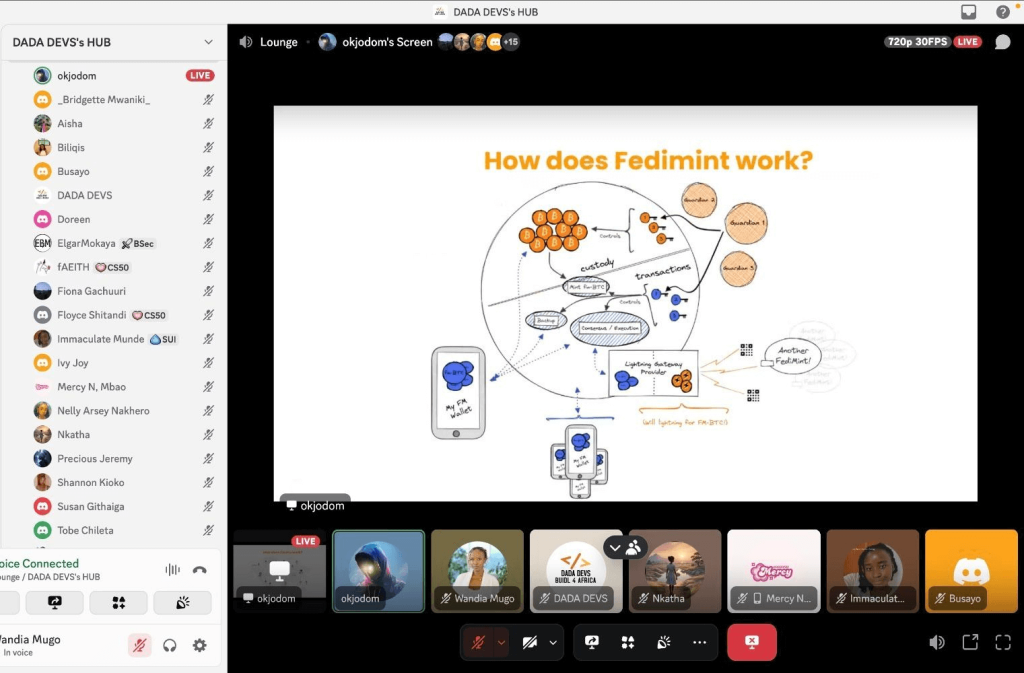
In November 2025, Dada Devs worked directly with the Fedimint SDK to introduce participants to federated custody at the implementation level. The focus was not conceptual exposure, but hands-on interaction with the primitives and architectural assumptions that define federated systems.
Over two days, participants built wallet components using the Fedimint SDK, engaging directly with questions of trust distribution, federation governance, and custody boundaries. The sessions examined how federated models differ from single-custodian and purely self-custodial designs, and how those differences surface in code, key management, and user flows.
This work moved participants closer to SDK-level reasoning, reinforcing that wallet development is fundamentally an exercise in system architecture and security trade-offs—not interface design alone.
Preparing for production-shaped environments
As the year progressed, Dada Devs moved participants decisively closer to production-shaped work. Ahead of the Bitnob developer bootcamp, a preparatory technical session focused on tooling, collaboration under time pressure, and delivery expectations. This ensured participants entered a time-bound build environment aligned on workflows, scope discipline, and review standards.
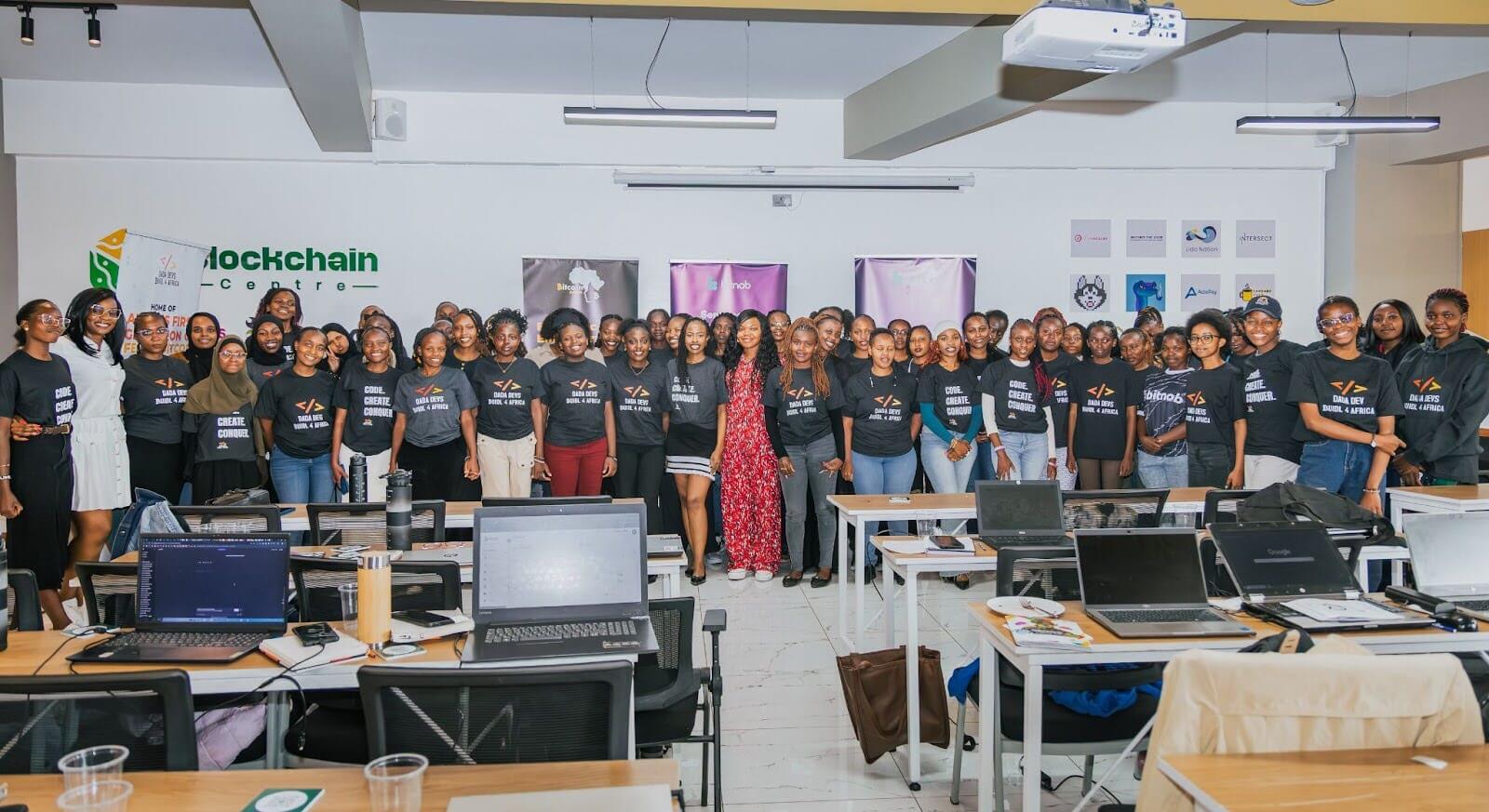
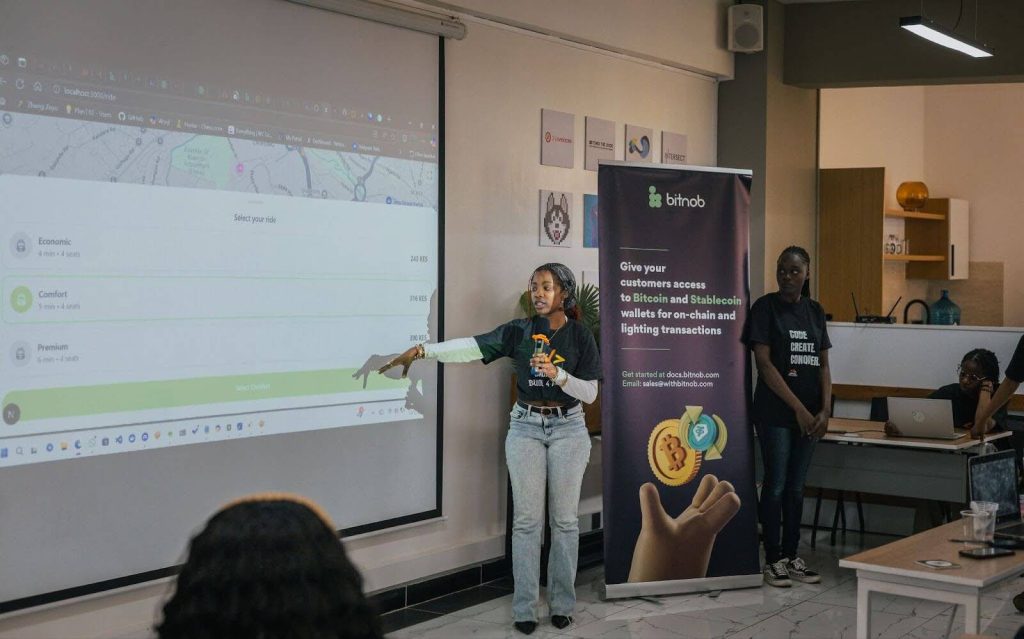
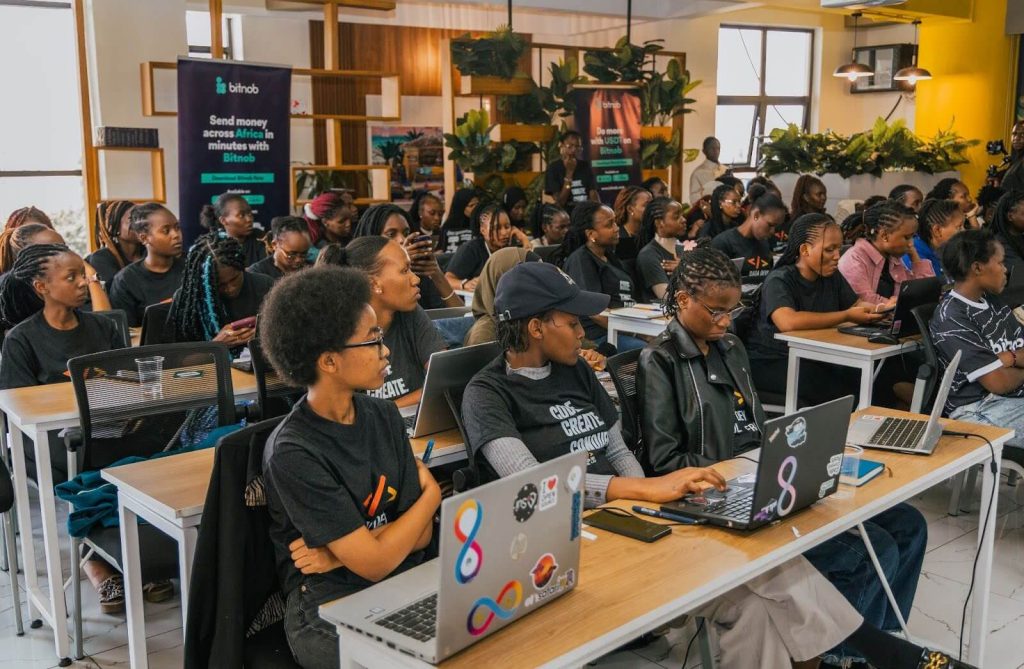
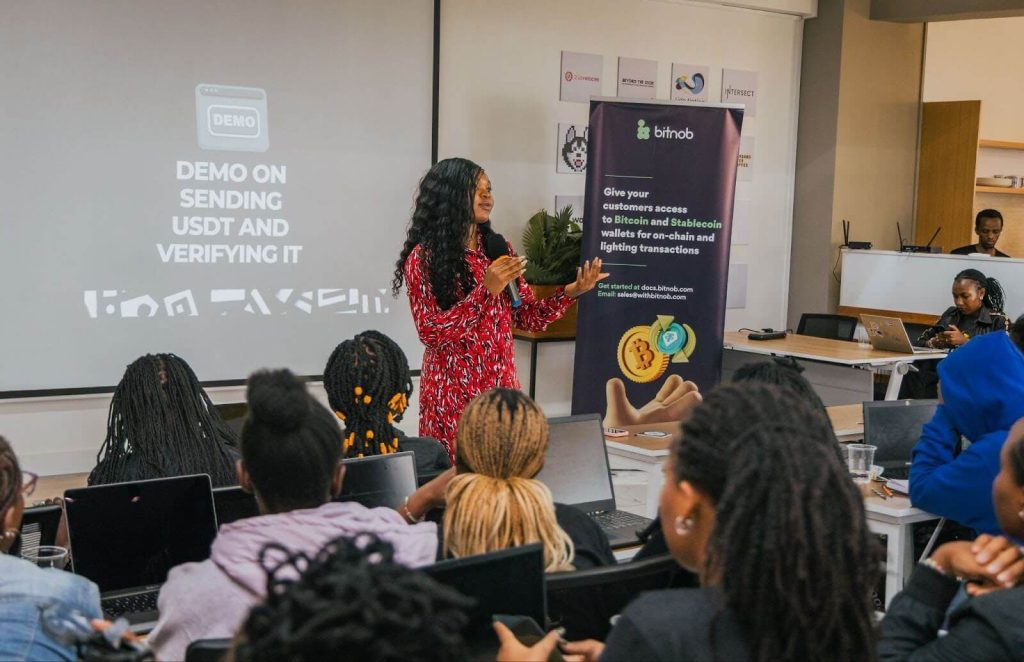
The Bitnob collaboration culminated in a three-day developer bootcamp and hackathon in Nairobi, bringing together 70 female developers—the largest female-only Bitcoin developer bootcamp held in Africa to date. Participants worked directly with live APIs, implemented Bitcoin payment flows, navigated real integration failures, and presented working MVPs under demo conditions. The format surfaced real trade-offs between ambition, system stability, and delivery readiness.
Technical facilitation was led by Bitnob engineers Munirat and Jennifer, who supported participants through implementation and integration challenges, alongside Bitnob’s marketing lead Damilola, who provided product and ecosystem context. Three projects were awarded for execution quality and technical rigor: Bitcab (1st place, $1,500), Satchat (2nd place, $1,000), and Deal Safe (3rd place, $500).
For many participants, this was their first experience building against a live product environment with external standards, real users, and non-negotiable constraints—marking a clear transition from instructional learning to production-oriented development.
What 2025 clarified
By the end of the year, a few things were clear.
- Peer led delivery supports consistency when expectations are explicit.
- Applied projects surface understanding faster than structured exercises.
- SDKs and live tooling change how people think about systems.
- Design and implementation cannot be separated in Bitcoin products.
Most importantly, technical confidence grows through sustained contact with systems, not through completion.
What does 2026 hold?
Dada Devs enters 2026 with clear structures and proven delivery models. The focus is depth — disciplined cohort execution, rigorous review practices, and sustained support for builders working beyond formal programs.
Partnerships will remain execution-driven, prioritising applied work and shared standards. The work continues by design. If you’d like to collaborate with us in 2026, we invite you to share your interest below.