
What Happens When African Women Build Bitcoin?
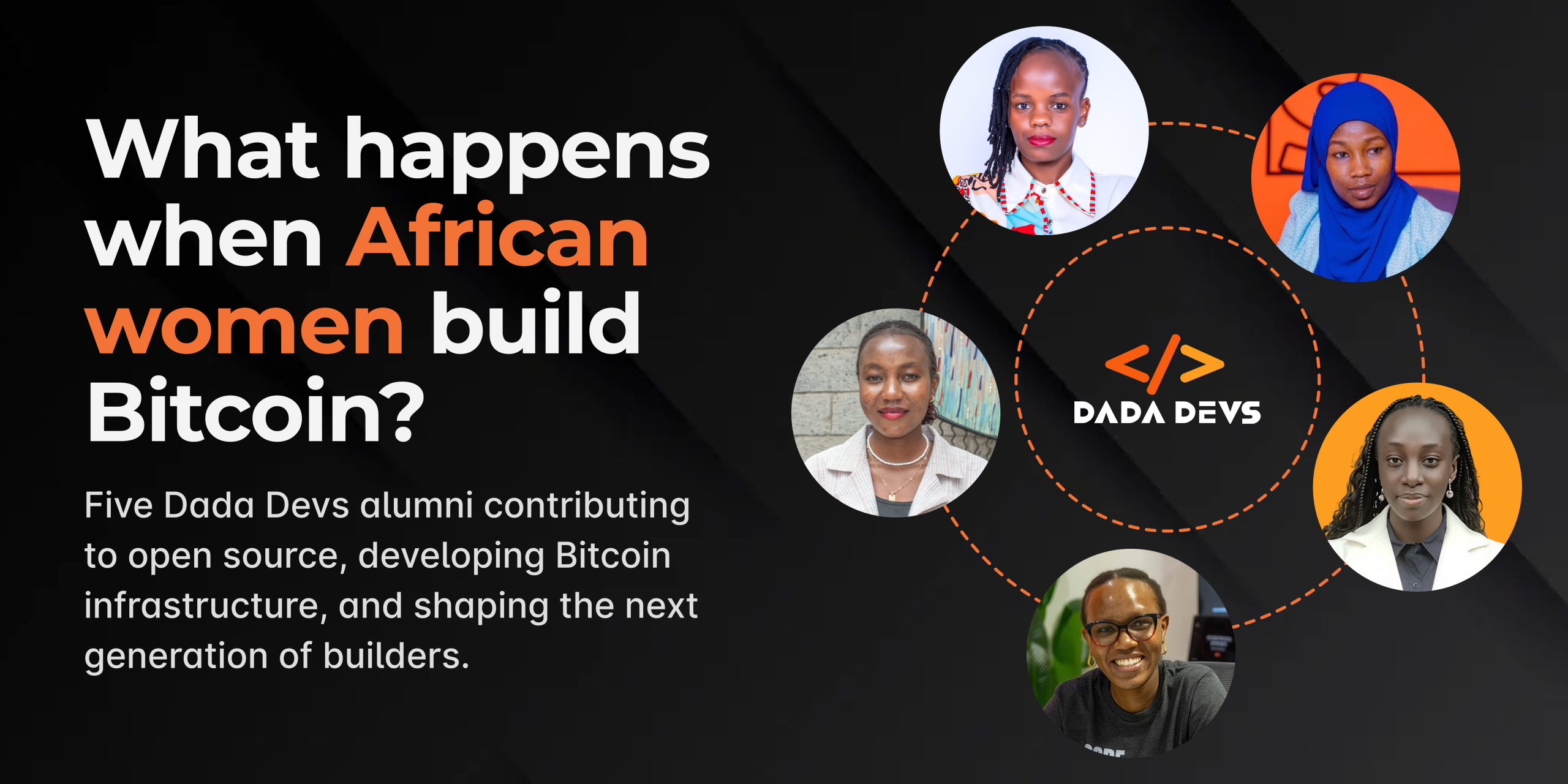
Five Dada Devs alumni based in Kenya contributing to open source, developing Bitcoin infrastructure, and shaping the next generation of builders.
Bitcoin’s future depends on more than the technology itself. It depends on the people who maintain its code, improve its infrastructure, build applications, and make it possible for others to participate in its development.
Across Africa, women are contributing to this work through open-source development, independent projects, technical research, and developer education.
At Dada Devs, we believe that developing Bitcoin engineering talent means creating pathways into the ecosystem where that talent can be applied. Training is one part of the process. What happens afterwards matters just as much.
The work of these five alumni illustrates what that participation looks like. Their paths differ, but each demonstrates a different way of contributing to Bitcoin: from working on established open-source projects and exploring protocol-level infrastructure to building products and helping other developers grow.
Susan Githaiga: Building Across the Open-Source Stack
Susan is a full-stack software developer and Bitcoin open-source contributor. Her work spans application development, protocol-level infrastructure, and developer tooling.
Her portfolio includes contributions to Blockstream’s Esplora, the BTCPay Server Tando plugin, Mujina under the 256 Foundation’s mining protocol work, and the Bitcoin Dev Project. She has also contributed to OpenTelemetry, improving accessibility within the platform’s registry.
As part of Chaincode Labs’ BOSS 2026 cohort, Susan worked across several areas of the Bitcoin development stack. Her featured project was a Lightning Network fee-bumping service designed to help address stuck Bitcoin transactions.
Her contribution to Mujina offers a concrete example of this engineering work. She replaced a third-party CRC dependency with inline CRC-5 and CRC-16 implementations while preserving the existing public API and adding test coverage. The pull request was merged.
This work requires more than writing code. It involves understanding an existing codebase, preserving expected behaviour, and making changes that other developers can review and maintain.
Susan’s portfolio demonstrates how developers can contribute across infrastructure, applications, testing, and tooling while deepening their understanding of Bitcoin.
She also leads Bitcoin protocol study sessions for female developers across Africa through Dada Devs. Her work connects hands-on engineering with helping other developers engage more deeply with the protocol.
Explore her work: Open-source portfolio https://susangithaiga.com/#open-source Mujina Contribution https://github.com/256foundation/mujina/pull/103
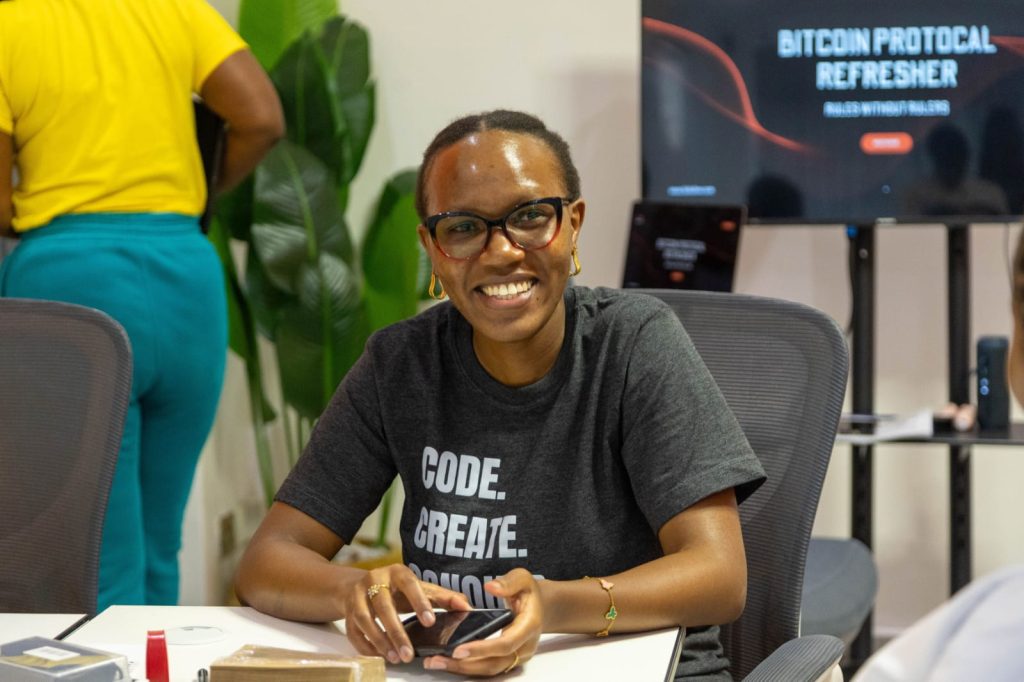
Sharon Nkatha: Working Closer to Bitcoin’s Foundations
Sharon Nkatha is a backend developer and open-source Bitcoin developer, whose interests lie close to the protocol, with a focus on building tools that help people understand Bitcoin and its underlying systems.
Her contributions include work on Warnet and Braidpool, projects connected to Bitcoin testing and mining infrastructure.
In Braidpool, Sharon contributed a change introducing per-miner counters for accepted, stale, and invalid shares. These counters improve visibility into mining-pool activity, helping distinguish between different share outcomes. The contribution was merged into the project. She has received a starter grant since then to contribute full time to braidpool mining protocol.
Sharon also completed the BOSS Challenge 2026, where she built Know Your Coin History, a tool for exploring Bitcoin transaction history. The project reflects her interest in making Bitcoin’s underlying mechanics more accessible through software
Beyond coding, she leads Socratic sessions for BitDevs Nairobi, contributing to discussions where developers and enthusiasts examine technical questions and Bitcoin protocol developments.
Her work brings together protocol-oriented development, independent tool-building, and technical community participation. Each provides a different route to understanding and contributing to Bitcoin.
Explore her work: GitHub https://github.com/nkatha23 | Braidpool contribution https://github.com/braidpool/braidpool/pull/503

Nelly Nakhero: Building for Real-World African Use Cases
Nelly Nakhero is a software engineer, Bitcoin builder, and open-source contributor interested in technology that addresses practical problems, particularly in community finance and digital commerce.
Her technical experience spans Java, Spring Boot, Next.js, and Bitcoin and Lightning systems.
One of her projects is ChamaVault https://chamavault.xyz/ , a Bitcoin-powered savings platform designed for the Kenyan chama (a group of people who pool money together regularly to save, invest, or support each other financially). Chamas are an established part of Kenya’s community finance landscape. Building technology for this context requires consideration of both the underlying software and the practices of the people expected to use it.
Nelly has also worked on digital certificate verification systems and Lightning-inspired escrow infrastructure for African digital commerce. These projects explore practical applications of technology in areas involving trust, verification, and transactions.
Her work connects product development with technical experimentation: identifying a problem, exploring an implementation, and considering how an application might fit into an existing context.
An alumna of Bitcoin Dada Cohort 9 and Dada Devs Cohort 3, Nelly now serves as a Peer Lead, mentoring emerging African Bitcoin builders. She also leads technical sessions at SheShips JVM, a community supporting women engineers working with Java, Kotlin, and related technologies.
Her involvement illustrates another important aspect of ecosystem participation: experienced developers helping others navigate unfamiliar concepts and develop the skills to contribute themselves.
Explore her work: ChamaVault https://chamavault.xyz/ | GitHub https://github.com/NellyNakhero
Mercy Mbao: Contributing to Bitcoin Core and Mentoring Developers
Mercy Mbao’s journey within Dada Devs has developed into a role combining technical contributions with responsibility for other developers’ progress.
An alumna of Dada Devs Cohort 1, Mercy now works as a Program Lead at Dada Devs. She contributes to Bitcoin Core, focusing on functional test coverage and pull request reviews, while mentoring developers through structured pathways.
Bitcoin Core is a widely used implementation of the Bitcoin protocol. Working on it requires familiarity with an established codebase, its development processes, and the importance of preserving expected behaviour.
Mercy’s work includes functional testing, which helps verify how software behaves under particular conditions. Her Bitcoin Core contribution adds test coverage for a “submitpackage” scenario involving transactions with the same transaction ID but different witnesses. Her pull request was merged into Bitcoin Core’s “master” branch in September 2026.
Mercy has also contributed to the BTCPay Server, Tando plugin, Warnet, and the Bitcoin Development Kit.
Her mentoring role extends that technical work by supporting developers as they build their understanding of Bitcoin’s technical foundations through our pathway.
Her progression from an early Dada Devs cohort to Program Lead and mentor illustrates how technical practice and developer education can reinforce each other. The ecosystem benefits both from people contributing code and from experienced contributors helping others develop the knowledge to participate.
Explore her work: GitHub https://github.com/mercie-ux | Bitcoin Core contribution https://github.com/bitcoin/bitcoin/pull/35893
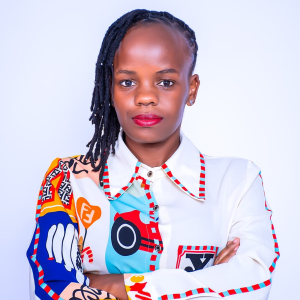
Salma Adam: Exploring the Intersection of Bitcoin and AI
Salma Adam is a software engineer and technical educator focused on building applications and infrastructure around Bitcoin-native rails. A Bitcoin Dada alumna and Dada Hub residency fellow beneficiary, she represents another dimension of the developer community: exploring emerging technologies alongside Bitcoin-focused engineering.
Salma is currently engineering AMANA, a voice-to-value AI model designed around the African context, with the aim of scaling Bitcoin solutions. Her work brings together AI engineering and an interest in protocol-level systems.
The project raises an important question for builders: how can emerging interfaces and technologies make Bitcoin-based applications more useful in different contexts?
AMANA represents Salma’s current technical direction. Its implementation and results will ultimately determine its contribution to the ecosystem.
She has also received recognition through a nomination associated with Women in Tech Global. This recognition adds context to her professional trajectory, while her ongoing engineering work remains central to her contribution.
Her story adds a forward-looking dimension to these profiles. Bitcoin development continues to intersect with other areas of software engineering, creating opportunities for developers to explore new applications and approaches.
Explore her work: GitHub https://github.com/Salma-dev-ops | Recognition https://www.linkedin.com/feed/update/urn:li:activity:7503007161531277312/
The Work Continues
These five developers are following different paths. Their work spans Bitcoin Core, mining infrastructure, developer tools, independent applications, and technical education.
Some contributions involve improving a specific part of an established codebase. Others involve developing products around practical use cases. Some developers are building their own projects, while others are helping their peers acquire the skills to contribute.
Each path demands different skills. Together, they illustrate the range of ways developers can participate in a technical ecosystem.
For Dada Devs, the objective is not simply to introduce women to Bitcoin. It is to support their development as engineers and create pathways through which they can contribute, collaborate, build, and continue learning.
These five women demonstrate different expressions of that objective. They are not merely potential participants in Bitcoin’s future. They are already contributing to the software, infrastructure, products, and communities that will shape it.
The work continues, and the future of Bitcoin is being built by an increasingly diverse community of contributors. Dada Devs is helping ensure that African women are part of that future—not just as participants, but as engineers shaping the technology itself.